
Tick Control on Long Island
Where ticks hide, when they become active, and why wooded edges matter for Nassau County and Suffolk County homeowners.
 By LaurieUpdated May 6, 2026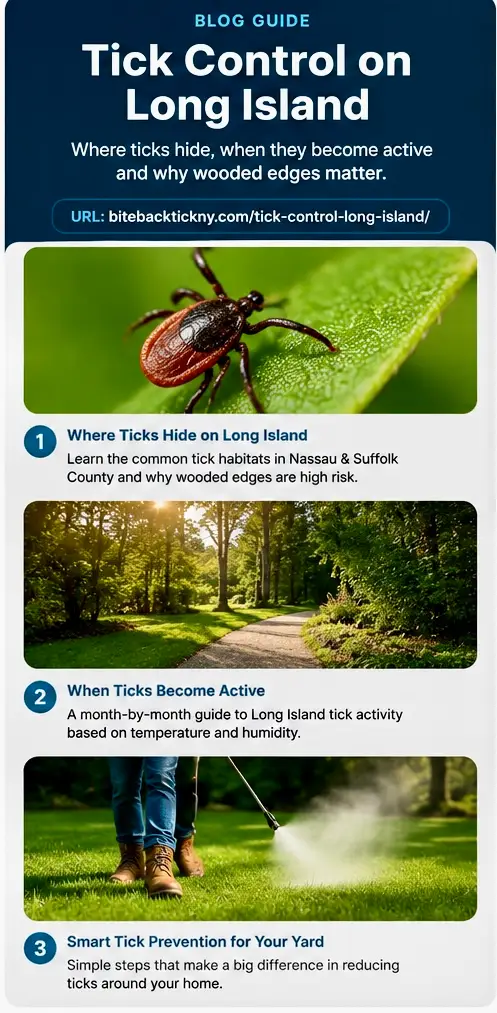
Where Ticks Hide on Long Island
Ticks are edge pests. They do not usually start in the middle of the open lawn. They build pressure in shaded, protected areas where humidity stays higher and wildlife moves through.
Leaf litter and brush
Leaves, brush piles, ivy, and dense groundcover protect ticks from drying out.
Wooded borders
Properties near preserves, greenbelts, and wooded lots often have more tick pressure.
Pet paths
Dogs often pick up ticks along the same gate, fence, and side-yard routes.
When Ticks Become Active on Long Island
Ticks can become active during mild weather, especially when protected by leaves, mulch, or shaded groundcover. Spring is the major exposure window, but fall and warm winter days matter too.
- Late winter warmups can trigger activity in sheltered areas.
- Spring brings small nymph ticks that are easy to miss.
- Summer ticks persist in humid shade and wooded borders.
- Fall can bring a strong adult tick surge near deer paths and leaf litter.
Long Island tip: Do not wait until the first tick is found. The pressure has usually been building along the edges for weeks.
Why Wooded Edges Matter
Wooded edges connect your yard to wildlife movement. Deer, mice, chipmunks, birds, and pets can move ticks into the areas your family uses.
That is why targeted tick control should focus on fence lines, shrub beds, shaded transitions, and the places where the lawn meets brush or trees.
High-risk zones
- Fence lines and hedges
- Under decks and steps
- Playset borders
- Shaded side yards
- Woodlines and preserve edges
How to Reduce Tick Pressure in a Long Island Yard
The best results come from combining smart yard habits with consistent targeted service.
Clean the edges
Remove leaf litter and brush from fence lines, shrubs, sheds, and play areas.
Trim dense growth
More airflow and less groundcover means less protected tick habitat.
Target hot zones
Professional service should focus on the areas where ticks live and rebuild.
Tick Control on Long Island FAQ
Are ticks worse in Nassau or Suffolk?
It depends on the yard. Suffolk often has more wooded and deer-heavy properties, but Nassau homes near preserves, dense hedges, and shaded landscaping can also have high pressure.
Do ticks live in mowed grass?
Ticks prefer shaded, humid edges more than dry open grass, but they can move into lawn areas from borders, pets, or wildlife.
Need Tick Control on Long Island?
Request a fast quote and we will help match your Nassau or Suffolk yard to the right seasonal plan.