What to Do If You Find a Tick on Your Child
Clear next steps for Long Island parents after a tick find, including safe removal, what to watch for, and when to contact your doctor.
 By LaurieUpdated May 6, 2026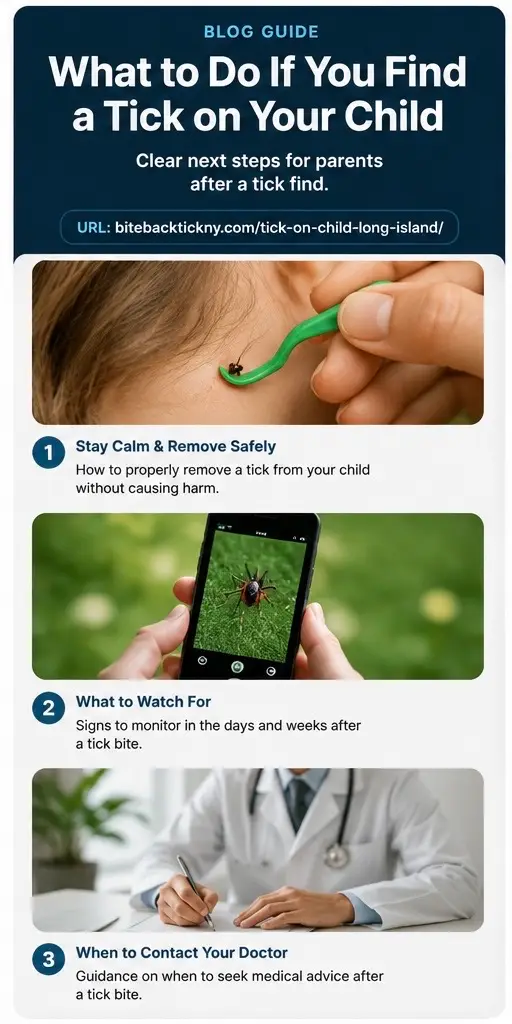
First, Stay Calm and Remove the Tick Properly
Finding a tick on your child is scary, but panic makes it harder. The goal is to remove the tick cleanly, avoid squeezing the body, and keep track of what you saw.
Do not crush it
Try not to squeeze the tick’s body while removing it.
Use tweezers
Fine-tipped tweezers are the safest simple tool for removal.
Clean the area
Wash the bite area and your hands after removal.
How to Remove a Tick From Your Child
Use slow, steady pressure and pull upward. Do not twist, burn, paint, or cover the tick with home remedies.
- Use fine-tipped tweezers.
- Grab the tick as close to the skin as possible.
- Pull upward with steady, even pressure.
- Clean the bite area with soap and water or antiseptic.
- Take a clear photo of the tick if you can.
Medical note: This guide is educational and not a replacement for medical advice. When in doubt, contact your pediatrician.
Save the Details for Your Doctor
After the tick is removed, write down what you know. This can help your doctor decide whether follow-up is needed.
Useful details include the date, where on the body the tick was found, where your child may have picked it up, and whether the tick looked flat or engorged.
Save these details
- Date and time found
- Body location
- Possible yard or trail exposure
- Photo of the tick
- Any symptoms that develop
What to Watch for After a Tick Bite
Monitor your child for changes in the days and weeks after a tick bite.
Skin changes
Watch the bite area and any new rash or spreading redness.
Flu-like symptoms
Fever, chills, headache, fatigue, and body aches should be taken seriously.
Behavior changes
Call your doctor if your child seems unusually tired, achy, or unwell.
When to Contact Your Doctor
If you are unsure, calling the pediatrician is always reasonable. It is better to ask than to guess.
- The tick may have been attached for a long time.
- The tick looked engorged.
- You could not remove the tick completely.
- A rash, fever, headache, fatigue, or body aches develop.
- Your child was bitten in a high-risk tick area on Long Island.
Tick on Child FAQ
Should I save the tick?
You can save the tick in a bag or container or take a clear photo. Ask your doctor whether they want to see it.
Should I use petroleum jelly or heat?
No. Use fine-tipped tweezers and steady upward pressure. Avoid burning, twisting, or covering the tick.
Want Fewer Tick Encounters in Your Long Island Yard?
Request a fast quote and we will help identify the tick hot zones around your property.